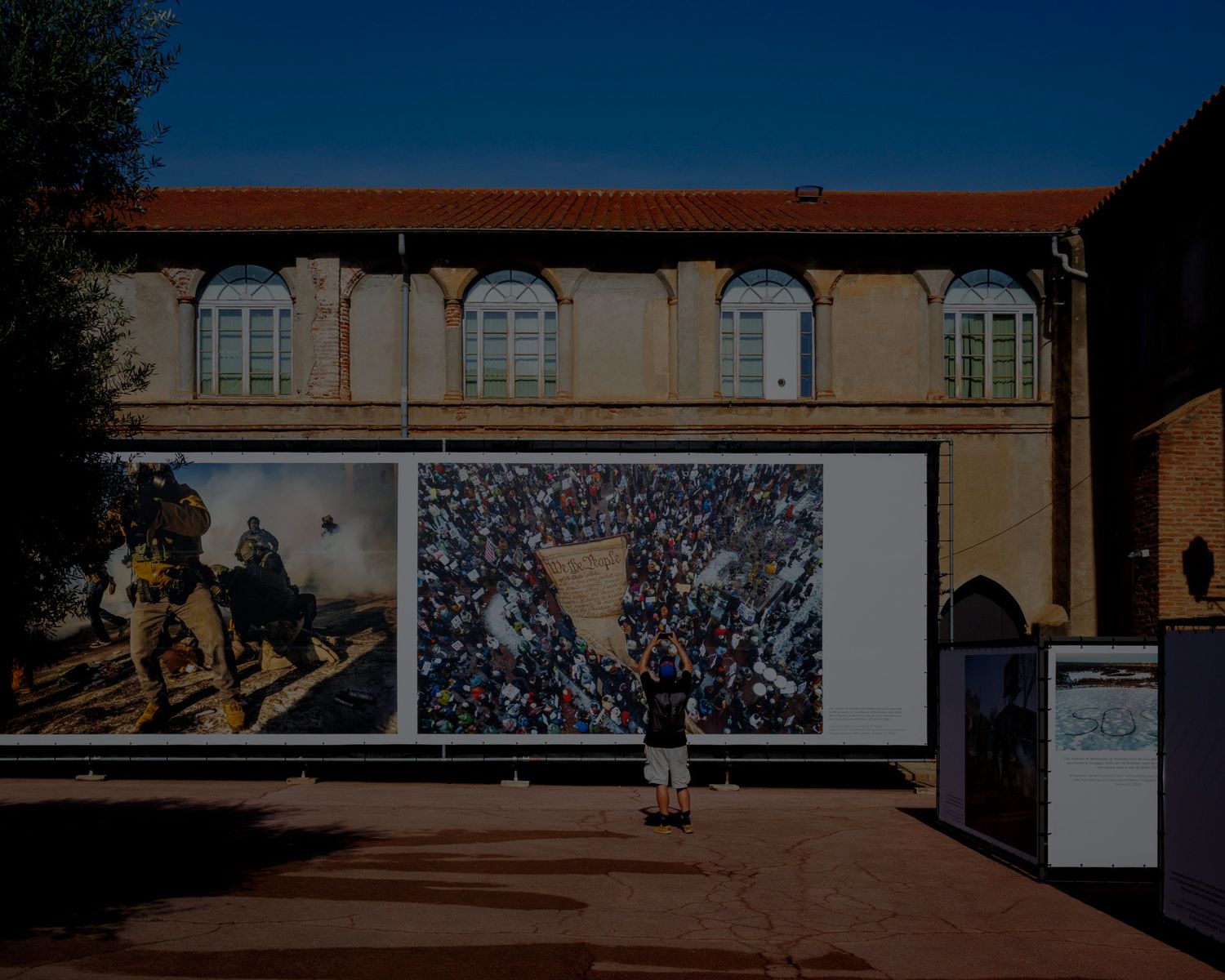

Above: Common Sense by Martin Parr: Festival Tribute.
This year's Bristol Photo Festival is built around the theme of Time Machine, exploring how photography connects past, present and future. Visiting exhibitions across the city, I was struck by how differently photographers approach the subject. Some use photography as a documentary tool. Others use it to reconstruct memory, question identity or build entirely new visual languages.
Not all of these approaches resonated equally with me.
Family times
My favourite exhibition of the festival was Family Times at Centrespace. Featuring work by Annie Wang and Liu Hsing Yu, the exhibition explores family relationships across generations.
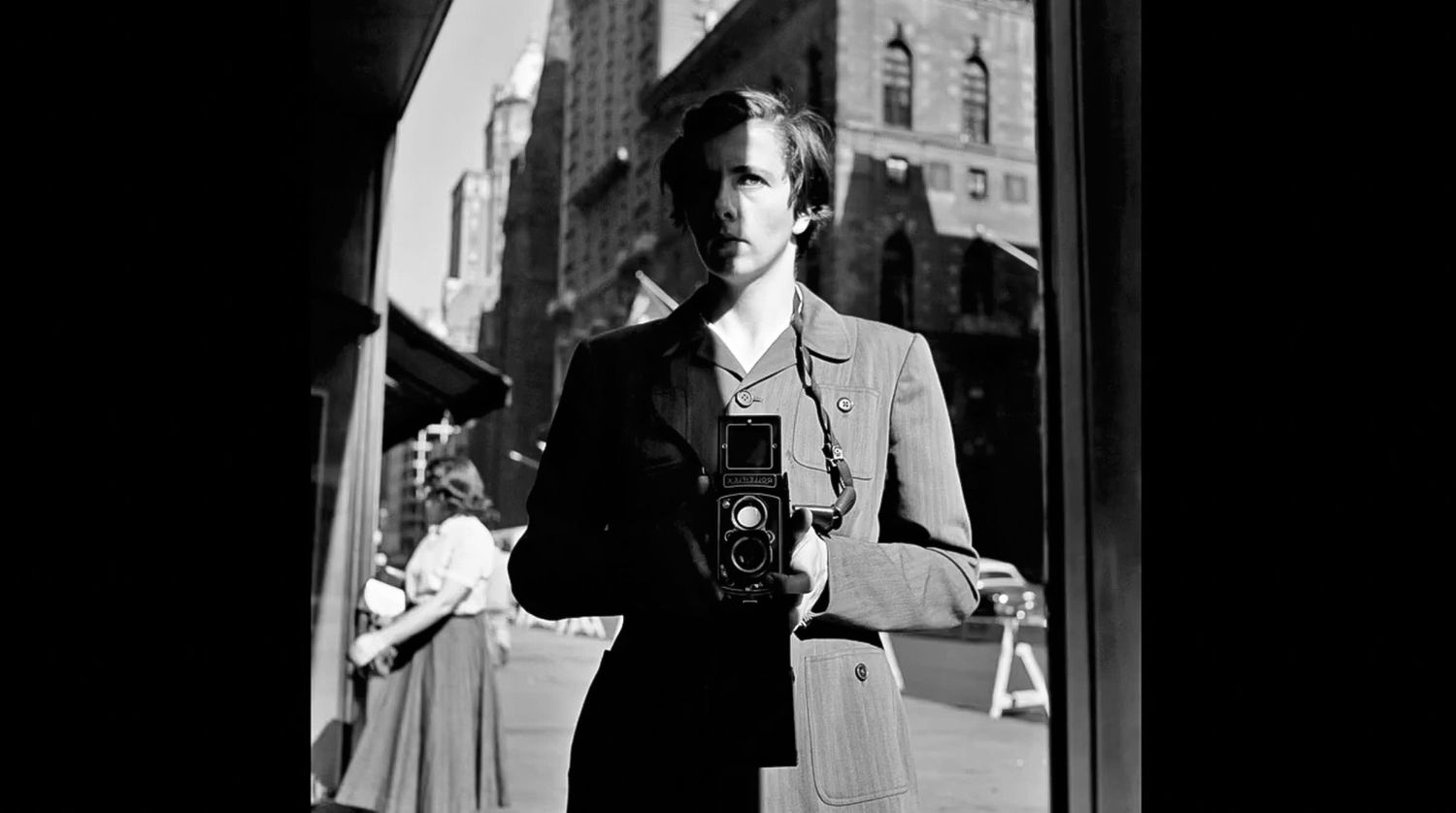
What appealed to me most was Wang's The Mother as a Creator. Since 2001, she has photographed herself and her son once each year, returning annually to make a new portrait in front of the previous image. Over time, multiple versions of mother and child accumulate within a single frame, creating what she describes as a visual "time tunnel". It's a deceptively simple idea, but an incredibly powerful one.
Wang's work is a reminder of what can be achieved through sustained attention. The project reveals changes that could never be communicated in a single image. Ageing, growth and relationships emerge slowly, frame by frame. Of everything I saw during the festival, this was the work that stayed with me. It's a compelling demonstration of how a genuinely long-term project can reveal something that simply isn't visible in shorter, more immediate bodies of work.
Joy Gregory: Catching Flies with Honey
At Arnolfini, Catching Flies with Honey surveys more than four decades of Joy Gregory's practice, bringing together photography, film, installation and textiles. Gregory explores identity, race, beauty, belonging and cultural history while continually challenging assumptions about what photography can be. I visited the exhibition with a friend, gallery owner and curator who had previously represented some of Gregory's work. She loved it, describing it as one of the strongest exhibitions she had seen in years. I was less convinced.
That reaction probably says as much about me as it does about the work itself. As a commercial architectural photographer, I spend much of my life pursuing technical precision. Focus matters. Tonality matters. Print quality matters. Craft is not separate from the message. For me, craft is part of the message. Because of that, I often struggle with contemporary art photography when technical execution appears secondary to concept. Out-of-focus portraits, deliberately imperfect imagery and heavily manipulated processes can feel jarring. I understand the intention, but I don't always find the results visually persuasive.
Gregory's work frequently employs alternative photographic processes and historical techniques. While I admired the breadth of experimentation, there were moments when the process felt more important than the subject itself. One example was The Handbag Project, Gregory's long-running exploration of handbags owned by women during apartheid-era South Africa. The stories attached to these objects are fascinating and culturally significant, yet I found myself wanting to see the handbags themselves rather than interpretations of them through photographic processes.
For me, the objects already contain the narrative. Perhaps this is where some contemporary art photography loses me. By filtering a subject through layers of process and interpretation, it can create distance between viewer and object. In this case, I felt the handbags themselves might have communicated more directly and more powerfully than their representations.
That said, the exhibition sparked a lengthy discussion afterwards, which is probably one measure of its success. Good work does not always have to be agreeable work.


Above: Annie Wang, The Mother as a Creator. Welcome building exhibitions and Kit Form exhibitions.
The Welcome Building and Martin Parr
Despite my very different reactions to these exhibitions, they shared something in common. Neither was really about a single photograph. Both relied on accumulation, context and the gradual layering of meaning over time. That idea followed me to the Welcome Building.
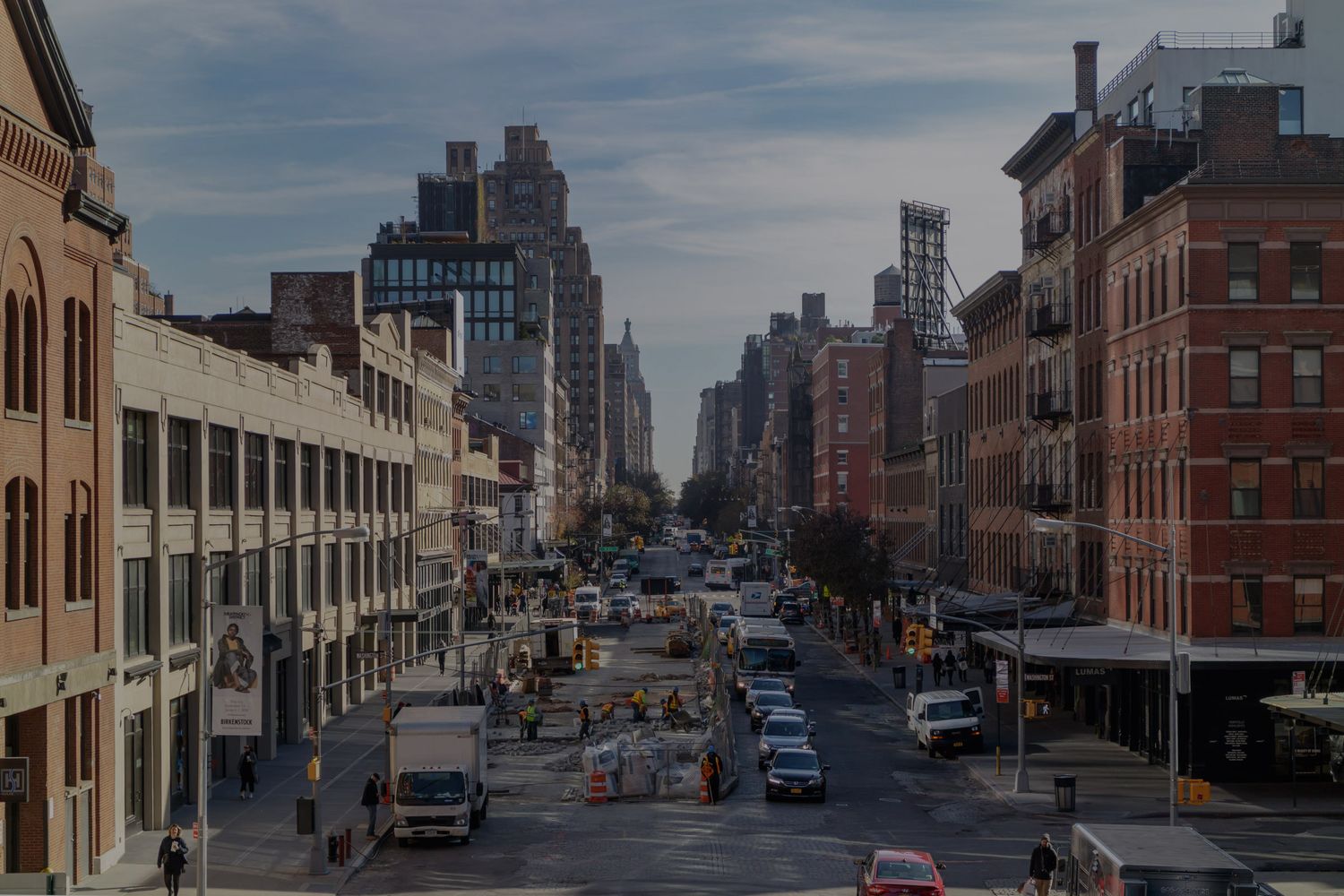
The building has become one of the festival's principal hubs for exhibitions, talks and events. For us, it carries a personal significance because we documented its construction between 2022 and 2025 before returning to create the completed architectural photography in 2025. Looking back through those images while attending this year's festival created an unexpected connection with the Time Machine theme. Our archive contains several chapters of the building's recent history: the construction site, the emerging structure, the completed development and now, only a year later, its reinvention as a cultural venue.
When we photographed the finished building in 2025, it appeared settled in its purpose. Like most architectural commissions, the images captured a specific moment: pristine, occupied and apparently complete. Yet buildings, like photographs, rarely stay still. What was conceived as a commercial workplace has become a place for exhibitions, conversations and cultural exchange. The architecture remains largely unchanged, but its place within the city has evolved.
The same thought occurred to me while revisiting Martin Parr's Common Sense. I attended the original private-view launch at Ffotogallery in Cardiff in 1999 as part of the project's worldwide launch. Parr himself was there. Revisiting the work more than twenty-five years later carries an added poignancy. The photographs are unchanged, but the world around them is not. With great sadness, Martin Parr passed away in December 2025, having remained active and photographing until the very end of his life.
That inevitably changes how the work is viewed. What was once a contemporary project by a living photographer now forms part of his legacy. Time has transformed not only the meaning of the photographs, but our relationship with the person who made them. More than twenty-five years on, details that barely registered in 1999 have become fragments of social history. What once felt contemporary now feels historical. Standing in the Welcome Building, I found myself thinking about both at once. Here was a building whose construction and completion we had documented over three years, now hosting photographs I first encountered more than twenty-five years ago. Both had acquired new meanings through time. Neither was quite the same thing I remembered.
In many ways, the building became the clearest expression of the festival's theme. Annie Wang's work shows how long-term observation can reveal change within a family. Joy Gregory's work explores identity and memory across decades. Martin Parr's Common Sense demonstrates how photographs gather new meanings as the years pass. The Welcome Building offers a physical version of the same idea: a reminder that places accumulate stories, associations and significance long after the shutter has been pressed.
Photography allows us to see those transformations. Not because it stops time, but because it gives us something to return to.


Above: Welcome building under construction.
Final thoughts
The most interesting photographs were not necessarily those that captured a decisive moment. They were the ones that revealed what happened afterwards.
Annie Wang's work shows a family evolving over decades. Joy Gregory's exhibition explores identity, memory and cultural history through a lifetime of practice. Martin Parr's Common Sense demonstrates how photographs acquire new meanings as the years pass, while the Welcome Building itself illustrates how architecture can take on an entirely different role from the one originally imagined.
As photographers, we often focus on the moment the shutter is pressed. In architectural photography, that frequently means completion day: the point at which a project is finished and presented to the world. Yet the real story rarely ends there.
Buildings are occupied, adapted and reinterpreted. Families grow older. Artistic practices evolve. Even photographs themselves change as the world around them moves on. Perhaps that is photography's greatest strength. Not that it stops time, but that it gives us a point of return. A record against which we can measure change. Years later, a photograph remains.
Everything else moves on.
Below: Welcome building finished architectural photography.


About the author
Craig Auckland is founder of Fotohaus, an architectural photographer and filmmaker, and a specialist in documenting architecture, construction and the built environment for clients, publishers and design organisations across the UK and Europe.