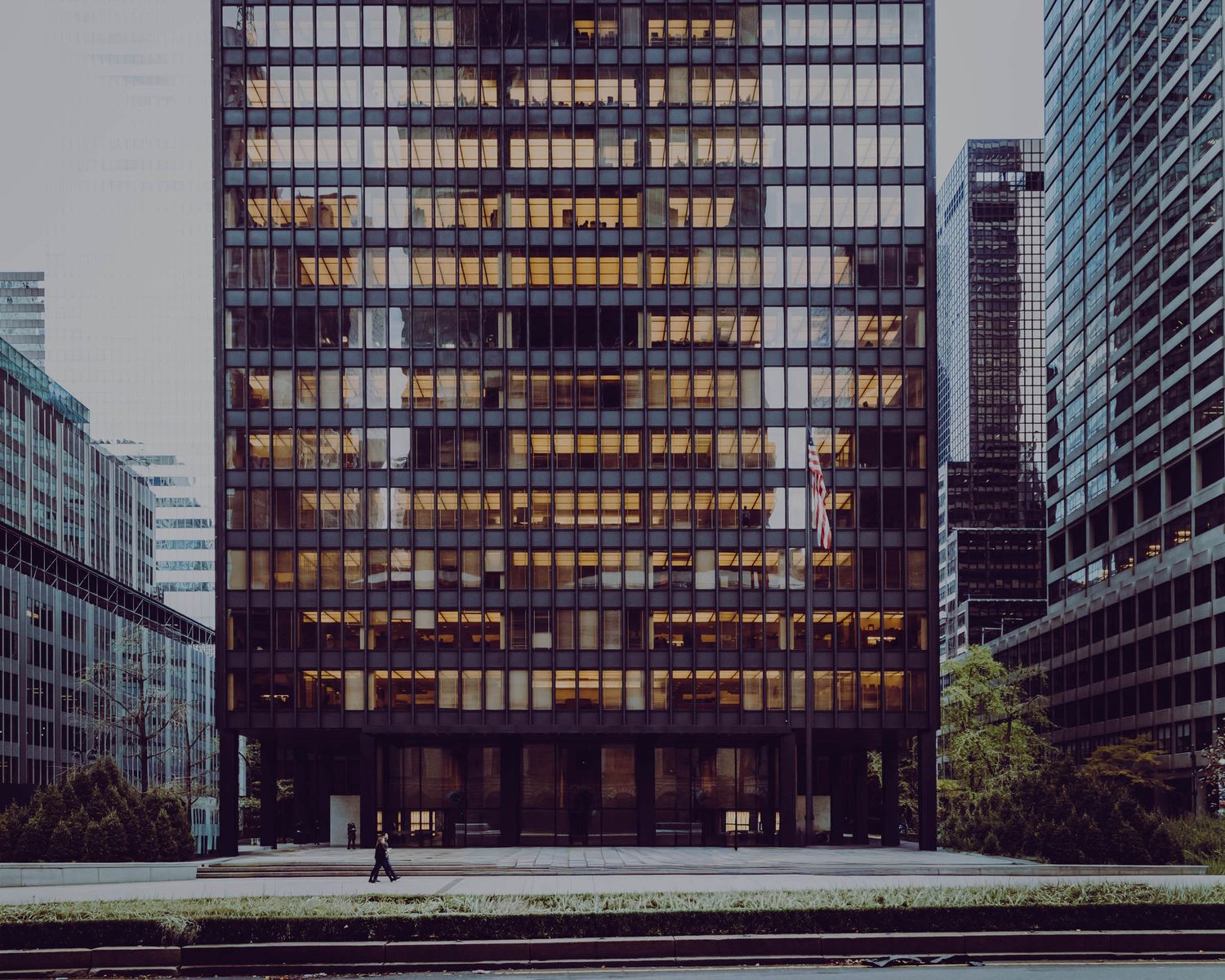

Above: Exhibition Road building, Victoria and Albert Museum, London by Amanda Levete Architects (AL_A) . Large areas of glazing create a visual dialogue between interior and exterior spaces, illustrating the increasingly blurred boundary between architectural and interior photography.
Where Does One End and the Other Begin?
When looking at a photograph of a building, it's not always obvious whether you're looking at an architectural photograph or an interior photograph. A bright museum gallery overlooking a historic courtyard, a glazed pavilion connecting landscape and architecture, or a house illuminated at dusk can often be both at the same time.
One of the questions we're asked surprisingly often is whether a project falls under architectural photography or interior photography. The honest answer? Most of the time, it's both.
In reality, very few of the commissions we photograph sit neatly in one category. A contemporary home, a boutique hotel, a workplace fit-out, museum extension or restaurant launch will almost always have exterior and interior elements that need documenting. More importantly, the client is often the same. The architect who designed the building wants to show how it sits within its surroundings, but they're just as interested in the experience of moving through the spaces within it. Likewise, a hotel operator may need striking external imagery for marketing, alongside carefully crafted interior photographs that sell the guest experience.
That said, not every commission requires both approaches. Retail fit-outs, hospitality refurbishments, workplace interiors and specialist joinery installations are often entirely focused on the interior environment. In these projects, there may be little value in photographing the building externally. Instead, the emphasis shifts towards spatial planning, material choices, bespoke craftsmanship, customer experience and the quality of the finished fit-out. Here, interior photography becomes the primary tool for communicating the success of a project.
From our perspective, architectural and interior photography aren't competing disciplines. They're complementary parts of the same visual story. Most projects benefit from a combination of architectural photography, interior photography and detail-led images that help communicate both the design intent and the experience of the completed space.
The Building and the Experience
Architectural photography tends to focus on the building as an object. It's concerned with form, structure, materials and context. How does the building respond to its site? How does the light interact with the façade? How do the architect's ideas translate into something tangible?
Interior photography shifts the focus slightly. Here, it's less about the building as a whole and more about the experience of being inside it. The emphasis moves towards atmosphere, flow, detailing, craftsmanship and the way a space is used. That distinction sounds clear on paper, but on location the line between the two is often blurred.
Photographing a dramatic staircase, for example, could be considered architectural photography because it showcases the structural design of the building. Equally, it might be viewed as interior photography because it sits within an interior environment and contributes to the experience of the space. In truth, it doesn't really matter which box it belongs in. What matters is whether the photograph communicates the design effectively.


Above (left and middle): Roman Villa Museum at The Newt, Somerset by Stonewood Design Architects. Photographed from both sides of the glazing, the images reveal how exterior and interior perspectives combine to tell a more complete story. View more → Project page for Roman Villa Museum. Above right: Crocs retail fit-out. Unlike architectural commissions that require both exterior and interior perspectives, projects such as this are entirely focused on the interior environment. Here, the photography highlights brand identity, customer experience and the craftsmanship of the fit-out.
Same Project, Different Priorities
What often changes between exterior and interior work isn't the client or the project, but the priorities. Outside, we're paying close attention to massing, geometry, context and how the building relates to the landscape or streetscape around it. We may spend hours working around the movement of the sun or waiting for the right weather conditions to reveal the architecture at its best.
Inside, the challenge becomes balancing light, managing reflections, controlling colour temperature and revealing the details that define the character of a space. Furniture, finishes, material textures and carefully considered design decisions become increasingly important.
One of the biggest challenges is simply dealing with space itself. Unlike an exterior, where it's often possible to step back and allow the building room to breathe, interiors frequently place the photographer against a wall, in a doorway or tucked into the corner of a room. The temptation is to reach for ever-wider lenses in an attempt to capture everything at once. The problem is that wide-angle lenses can dramatically distort a space. Walls appear to stretch, furniture becomes exaggerated, and rooms can feel larger or differently proportioned than they do in reality. While wide-angle lenses are an essential tool in both interior photography and architectural photography, they have to be used carefully. Just because you can fit the entire room into a single frame doesn't necessarily mean you should.
In fact, some of the most successful interior photographs don't attempt to show everything. They focus instead on how a space is actually experienced. A well-composed image might reveal only part of a room, but communicate far more about its atmosphere, materiality and flow than an ultra-wide view ever could. As photographers, we're often balancing the client's desire to show the whole space against the need to create an image that feels believable and true to the way the room is read by the eye.
Yet both approaches require exactly the same thing: understanding what the designer was trying to achieve.
Why Clients Need Both
For architects and developers, exterior photographs without interiors tell only half the story. A beautiful façade creates interest, but viewers naturally want to understand what's behind it.
Likewise, interior images without any external context can feel disconnected. A carefully designed living space becomes more meaningful when we understand the building it belongs to and the environment surrounding it.
Dusk is often where architectural photography and interior photography naturally converge. As the light outside softens and the interior begins to glow, a photograph taken from the exterior can suddenly reveal both the building and the experience of being inside it. These transitional moments often produce some of the most informative images in a project, communicating architectural form, atmosphere and occupation simultaneously.
This is why, on many projects, the final image selection includes a mixture of wide exterior views, contextual shots, interior overviews and carefully observed details. Together, they create a complete narrative. We've found that some of the strongest architectural stories emerge from this combination. The exterior establishes the designer's vision. The interior demonstrates how that vision is experienced.
One Project, Multiple Perspectives:


Private House, Wiltshire by Designscape Architects. A project like this demonstrates why architectural photography and interior photography are rarely separate disciplines. Exterior views, interior perspectives and carefully observed sectionals work collectively to communicate the design. The dusk photograph, with the interior illuminated from within, provides a natural meeting point between the two approaches. View this project complete contact sheet or more projects like this → Our Portfolio
Different Techniques, Shared Objectives
There are, of course, technical differences between the two disciplines.
Architectural photography often demands rigorous control of perspective, precise compositions and careful consideration of scale.
Interior photography presents its own challenges, particularly when working in confined spaces with a mixture of natural and artificial light.
But despite the differences in execution, the objective remains remarkably similar: to create photographs that communicate design. Whether we're standing across a street photographing a newly completed façade or squeezed into the corner of a compact kitchen trying to find the perfect composition, the goal is unchanged. We're translating three-dimensional spaces into two-dimensional images while retaining the intent of the people who created them.
The Reality
Perhaps the simplest way to look at it is this: architectural photography and interior photography are less separate disciplines than they are different chapters of the same story.
Most of the projects we photograph require both. The clients commissioning the work are often the same people. And the final images are usually destined for the same brochure, website, awards submission or publication.
The question, therefore, isn't whether a project is architectural or interior. It's how best to photograph every part of it.
Because the most compelling visual narratives rarely stop at the front door.
When the Distinction Disappears:

About the author
This Field Note was written by the Fotohaus team. Drawing on decades of experience documenting architecture and the built environment, we share practical guidance, project insights and reflections on photography, design and visual communication. Our team brings expertise from across architecture, construction, sustainability, journalism and photographic practice.